Maintaining your lawn tractor's engine health is crucial for its longevity and performance. A key component of this maintenance is using the right motor oil. Choosing the wrong oil can lead to decreased performance, increased wear, and costly repairs. This guide provides a straightforward approach to selecting and changing your lawn tractor's motor oil, ensuring your machine runs smoothly for years to come. For a more detailed visual guide, check out this oil change tutorial.
Understanding Lawn Tractor Motor Oil
Your lawn tractor's engine requires the correct type of motor oil to function optimally. Think of oil as the lifeblood of your engine; it lubricates moving parts, reducing friction and preventing wear. Choosing the appropriate oil ensures your engine runs smoothly, efficiently, and lasts longer.
Oil Viscosity: The "Thickness" Factor
Oil viscosity refers to its thickness or flow rate. This is crucial because it impacts how well the oil lubricates your engine at various temperatures. You'll see viscosity grades on oil bottles, such as SAE 30, 10W-30, and 5W-30.
Single-Grade Oils (e.g., SAE 30): These oils are designed for a specific temperature range. They are less expensive, but their performance suffers in temperatures outside their optimal range.
Multi-Grade Oils (e.g., 10W-30, 5W-30): These oils perform well across a broader temperature range. The "W" denotes "winter," with lower numbers indicating better cold-weather flow. A 5W-30 flows better in cold temperatures than a 10W-30. Multi-grade oils are generally preferred for their versatility.
Oil Type: Conventional vs. Synthetic
Two main types of motor oil exist: conventional and synthetic.
Conventional Oil: Refined from crude oil, conventional oil is more affordable but has a shorter lifespan and performs less effectively in extreme temperatures than synthetic options.
Synthetic Oil: Engineered in a lab, synthetic oil offers superior performance and protection. It lasts longer, performs better in extreme temperatures, and provides enhanced engine lubrication. While more expensive upfront, the longer lifespan can translate to long-term cost savings.
The following table summarizes the key differences:
| Oil Type | Pros | Cons |
|---|---|---|
| Conventional | Lower cost | Shorter lifespan; less effective in extreme temps |
| Synthetic | Longer lifespan; superior performance in all conditions | Higher cost |
| Synthetic Blend | Blends synthetic and conventional oils for a balance of cost and performance | Performance is between conventional and fully synthetic |
Choosing between conventional and synthetic depends on your budget and climate. In consistently warm climates, conventional oil may suffice. However, for fluctuating temperatures or demanding use, synthetic oil provides superior protection.
Choosing the Right Oil: A Step-by-Step Guide
Selecting the correct motor oil for your lawn tractor involves several crucial steps:
Consult Your Owner's Manual: Your owner's manual specifies the exact type and quantity of oil required for your specific model. This is the most reliable source of information. Ignoring this step could damage your engine.
Consider Your Climate: Hot summers and mild winters might allow for a single-grade or a 10W-30 multi-grade oil. Colder climates demand a lower viscosity multi-grade oil, such as a 5W-30 or even a 0W-30, for optimal cold-weather performance.
Determine Oil Type: Balance the cost of conventional oil with the long-term benefits of synthetic oil's superior protection and extended lifespan.
Follow the Oil Change Schedule: Adhere to the manufacturer's recommended oil change intervals to maintain engine health. This prevents sludge buildup and ensures optimal performance.
Performing an Oil Change: A Practical Guide
Changing your lawn tractor's oil is a straightforward procedure that can be done at home. A regular oil change is essential for extending engine life and avoiding costly repairs.
Safety First: Allow the engine to cool completely before starting. Wear appropriate safety gear (gloves, eye protection).
Gather Supplies: You need fresh oil (refer to your owner's manual), a new oil filter (if applicable), a wrench for the oil drain plug, a drain pan, a funnel, and rags.
Drain the Old Oil: Locate the oil drain plug, position the drain pan underneath, and carefully remove the plug, allowing the old oil to drain completely.
Replace the Oil Filter (if applicable): Unscrew the old filter and replace it with a new one.
Refill with Fresh Oil: Use a funnel to add the correct amount of new oil (check your owner's manual).
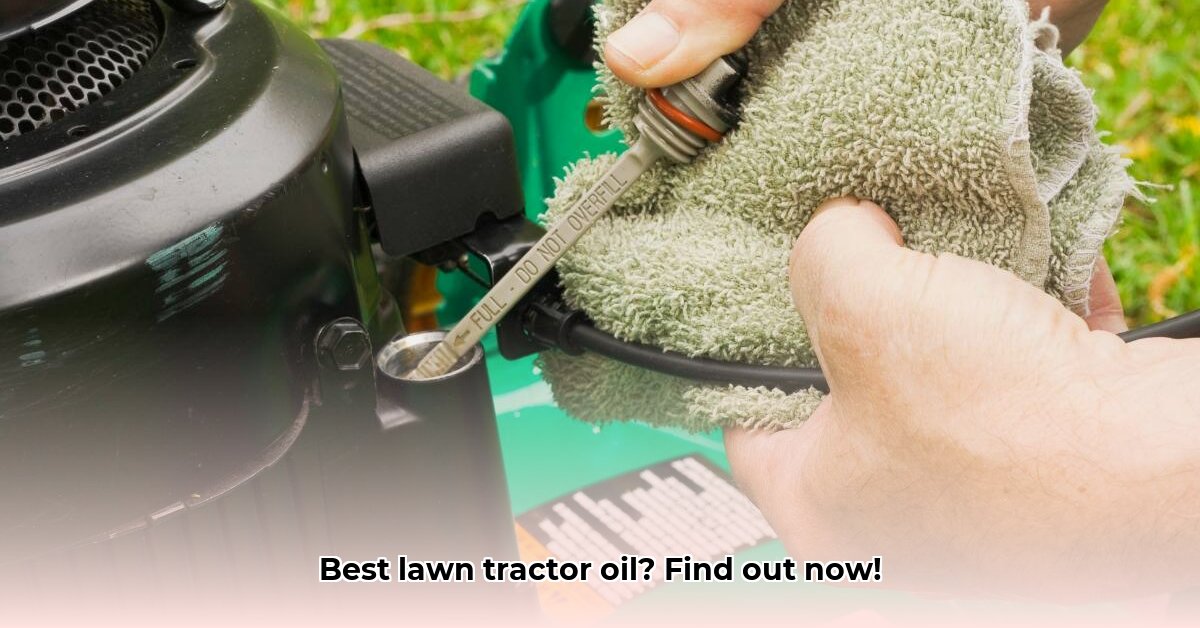
Check the Oil Level: Use the dipstick to ensure the oil level is correct. Add more oil if necessary.
Proper Disposal: Recycle or dispose of used oil responsibly according to local regulations.
Remember, regular oil changes are a crucial aspect of lawn tractor maintenance, contributing significantly to its longevity and performance. By following the guidance provided, you can ensure your lawn tractor remains a reliable workhorse for years to come.